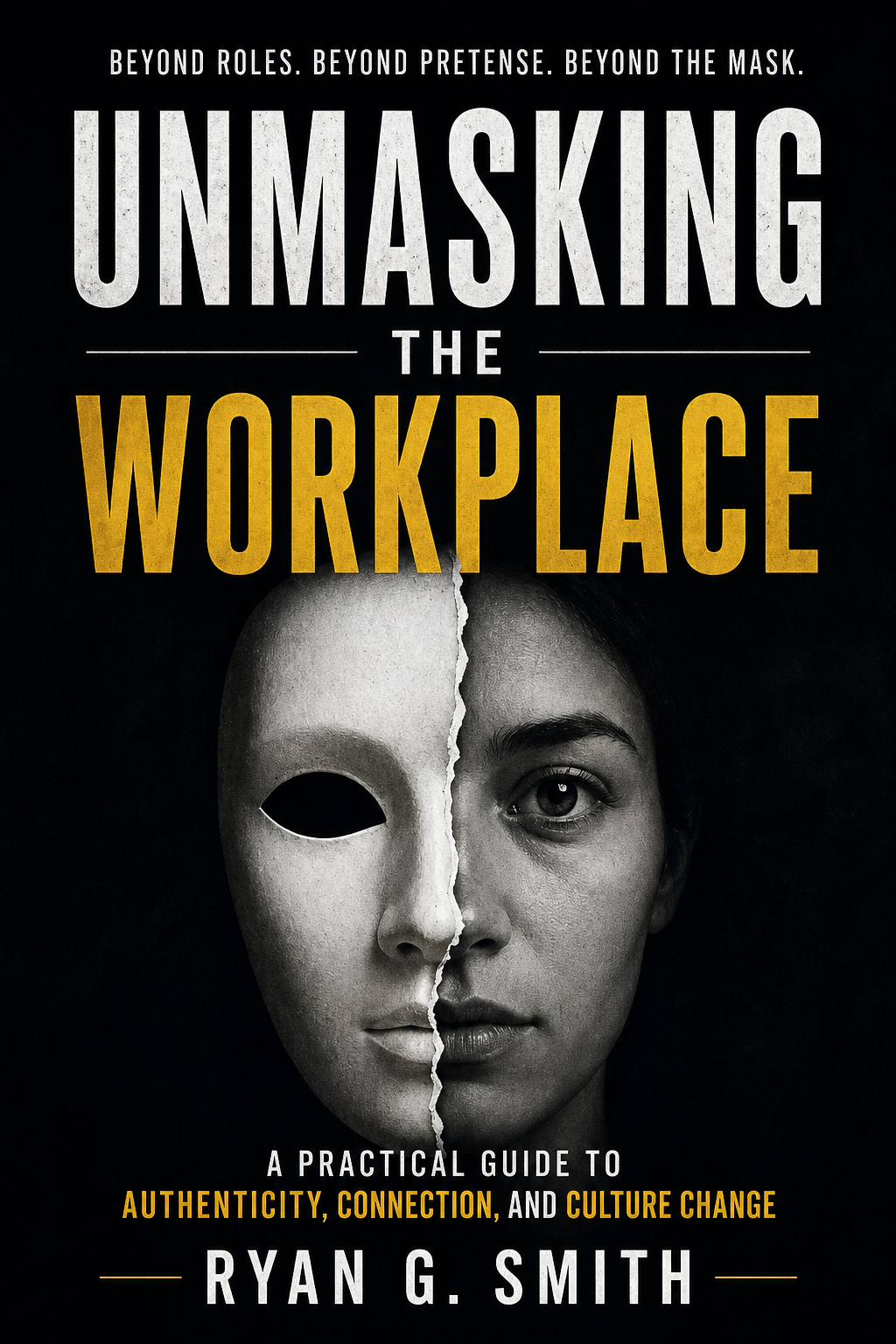
Workplace Masks
The Hidden Cost of Showing Up
Most employees are not disengaged—they are disguised.
Behind polished professionalism, relentless positivity, overachievement, and emotional detachment are people trying to stay safe, accepted, and successful. Workplace Masks reveals the emotional roles employees adopt at work—and equips leaders to build cultures where people no longer have to perform their way to belonging.
THE 10 WORKPLACE MASKS
These are not personality types. They are adaptive responses—ways employees navigate expectations, pressure, and belonging in the workplace.

-
Composed on the outside. Carrying everything on the inside.
-
Positive… even when it is not honest.
-
Performing at a high level to protect worth and credibility.
-
Keeping everyone happy to stay safe and accepted.
-
Projecting resilience while disconnecting from vulnerability.
-
Leading with certainty while fearing exposure.
-
Using motion as proof of value.
-
Staying all-in on the outside while checking out internally.
-
Doing the job without emotional connection.
-
Signaling stability while quietly struggling.
What Masking is Costing Your Organization
Masked employees can still perform. In fact, many of them perform exceptionally well. That is what makes this dynamic so difficult to detect—and so costly to ignore.
When employees feel the need to hide, manage, or perform parts of themselves to succeed, organizations begin to experience subtle but significant consequences.
Engagement that looks healthy but feels emotionally thin
Performance that hides burnout, fear, and misalignment
Cultures where fitting in matters more than telling the truth
Leaders misreading self-protection as commitment or resilience
Teams losing creativity, trust, and honest conversation
Over time, performance remains—but presence disappears.

What This Message Delivers
Workplace Masks is more than a concept—it is a practical leadership framework that helps organizations move from performative culture to authentic performance.
Language for what leaders are sensing but cannot yet articulate
Clarity on the emotional drivers behind workplace behavior
Insight into how culture unintentionally reinforces masking
Practical strategies to build trust and psychological safety
A shared framework that resonates across leaders, HR, and teams
When people no longer have to perform who they are, they can fully contribute who they are.

Coming Soon!
Unmasking the Workplace
A Practical Guide to Authenticity, Connection, and Culture Change